What to Expect After Surgery
Recovery from microtia reconstruction is gentler than most families expect. Here is exactly what the experience looks like — stage by stage.
Medically reviewed by Arturo Bonilla, MD — August 2026
What Recovery Typically Involves
Recovery from rib cartilage reconstruction is typically well-tolerated. Most patients rate discomfort at 1–2 out of 10. This page gives you a clear, honest picture of what to expect at every stage — so you can arrive prepared and leave with fewer surprises.
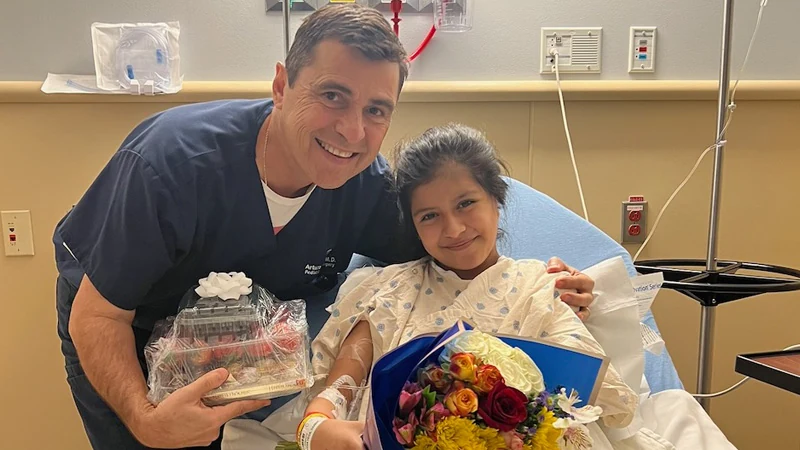
How Many Stages Does My Child Need?
Recovery depends on how many surgical stages your child’s reconstruction requires. This varies by grade.
Grade II reconstruction is completed in a single surgery. Your child stays overnight at North Central Baptist Children’s Hospital and is seen in the office one week later for drain removal. That is typically the only follow up required.
Grade III reconstruction is completed in two stages spaced approximately two months apart.
Grade IV reconstruction follows the same two-stage protocol: the complete ear structure is created in Stage 1, and the ear is elevated in Stage 2.
Both ears are reconstructed in three coordinated surgical visits over approximately four months. The middle visit combines Stage 2 on the first ear with Stage 1 on the second ear.
Stage by Stage Recovery
Stage 1 includes rib cartilage harvest, framework construction and placement, earlobe rotation, tragus formation, and conchal deepening. It is the only stage requiring an overnight stay and drains.
Recovery at a Glance
| Stage 1 | Stage 2 | |
|---|---|---|
| Hospital Stay | Overnight at North Central Baptist | Outpatient |
| Pain Level | 1–2 out of 10 | Minimal |
| Pain Medication | 2–3 days regular medication | Rarely needed |
| Drains | 2 drains removed at 1 week | None |
| Dressing Removal | None | Sponge removed at 1 week |
| Required Follow Up | 1 week office visit | 1 week office visit |
| Return to Normal Activity | Light activity for about 1 week | Light activity for about 1 week |
| Return to Heavy Activity | 4 to 5 weeks | A few weeks |
A Note on Multiple Stages
Some families worry that two surgeries mean two difficult recoveries. Stage 1 is the more involved procedure and includes the complete ear structure. Stage 2 elevation is outpatient with same-day discharge and a follow-up visit 5–7 days later for sponge removal.
Frequently Asked Questions About Recovery
Most children rate their discomfort at 1 to 2 out of 10 after Stage 1. Stage 2 is typically comfortable with little to no pain medication required.
After Stage 1 most children are close to normal within one week, after the drains are removed at the follow-up visit. No heavy activity is recommended for four to five weeks. After Stage 2, light activity is recommended for approximately one week.
Grade II microtia is completed in one Stage 1 surgery. For reconstructions requiring two stages, Stage 1 includes an overnight stay and a return visit for drain removal. Stage 2 is outpatient, but traveling families remain in the San Antonio area for 5–7 days until the sponge behind the ear is removed and Dr. Bonilla clears the child to travel home.
Grade II microtia reconstruction is completed in one Stage 1 surgery with an overnight stay and a follow-up visit for drain removal. Grades III, IV, and other grades requiring full reconstruction are completed in two stages.
Most children return to normal non-contact activities within a few weeks after each stage. No heavy activity or contact sports for four to five weeks after Stage 1. Dr. Bonilla will provide specific guidance based on your child’s individual healing at each stage.
For bilateral microtia, Dr. Bonilla uses three coordinated surgical visits over approximately four months. Visit 1 is Stage 1 on Ear 1. Visit 2 combines Stage 2 on Ear 1 with Stage 1 on Ear 2. Visit 3 is Stage 2 on Ear 2. Each stage follows the recovery guidance described above.
What Families Commonly Report After Surgery
Recovery is easier than you think it will be. Dr. Bonilla’s team is available to answer any specific questions about your child’s recovery at any point in the process.
To request a consultation or ask a question about recovery, submit your information through our contact form and Dr. Bonilla’s team will be in touch.