Microtia Care Team
A microtia diagnosis introduces you to a whole constellation of specialists. A microtia diagnosis involves a coordinated team of specialists. — and this team exists for one purpose: this team works together to support your child’s care at every stage — from first diagnosis through the final stage of reconstruction. Here is who each person is, when you will meet them, and how they all work together.
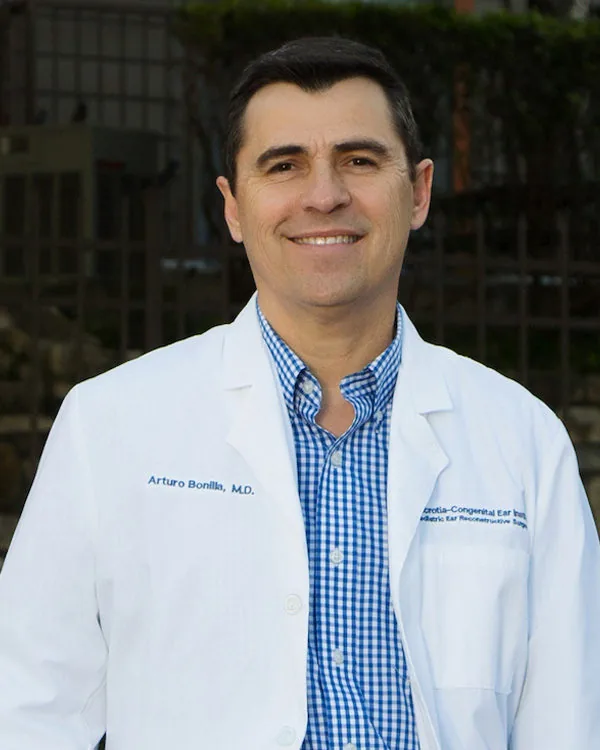
Dr. Bonilla introduces the dedicated specialists behind every microtia patient care.
The Specialists Involved in Microtia Care
Treating microtia well requires close coordination among a group of specialists — some you will see often, some only once or twice. Dr. Bonilla works alongside each of these specialists throughout your child's care, from first consultation through the final stage of reconstruction. Thousands of families from across the United States and more than 50 countries around the world have trusted this team with their child's care.
Countries
Children Treated
Combined Experience
The microtia surgeon is the most important specialist on your child’s team — and the one you will have the longest relationship with. This is a highly specialized surgical discipline: ear reconstruction using natural rib cartilage is one of the most technically demanding procedures in all of pediatric surgery. Not all plastic surgeons or ENT surgeons perform it. Seek out a surgeon whose practice is exclusively or primarily focused on microtia.
The microtia surgeon is the central point of coordination — advising on hearing device timing, guiding decisions about whether atresia surgery may be appropriate, and coordinating referrals to the specialized surgeons who perform that procedure. The microtia surgeon remains the first point of contact for anything related to the ear throughout your child’s development.
Reconstruction is typically performed between ages 6 and 9, when the rib cartilage is large enough to carve a full-sized ear framework and the child is mature enough to understand and participate in their care. Dr. Bonilla plans one or two surgeries, depending on the grade of microtia and the patient’s anatomy. First surgery: Cartilage Ear Reconstruction. Second surgery, if needed: Ear Elevation. When two surgeries are needed, treatment is generally completed over approximately two months; the second surgery may include placement of a bone-conduction hearing implant when selected.
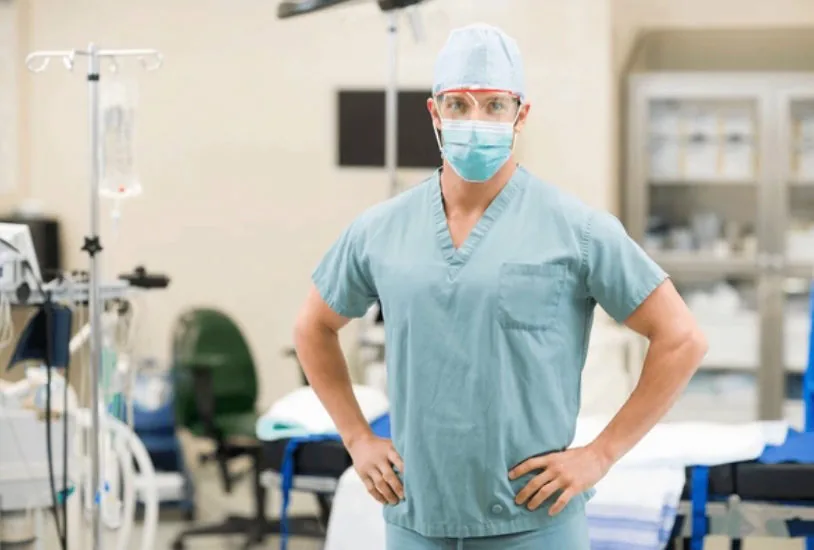
A pediatric anesthesiologist is not simply an anesthesiologist who works with children — they are a specialist who has dedicated their training exclusively to the unique physiology, pharmacology, and safety needs of young patients. Children are not small adults. Their airways, cardiovascular responses, metabolic rates, and medication tolerances are fundamentally different from those of adults, and managing anesthesia safely in a child requires a distinct and specialized skill set.
Dr. Bonilla works exclusively with board-certified pediatric anesthesiologists for every microtia reconstruction. This is non-negotiable. The precision and duration of ear reconstruction surgery demands an anesthesia partner who understands how to maintain a child’s safety, comfort, and stability throughout the entire procedure — from induction through recovery.
For families, knowing that a dedicated pediatric anesthesiologist is part of your child’s surgical team means one thing above all else: your child’s safety and comfort throughout surgery are in the hands of a specialist whose entire training is focused on exactly that — not just during the reconstruction itself.

For most families, the story begins with their pediatrician or family doctor — often at a newborn hearing screening or early well-child visit where the ear’s appearance first prompts a closer look. Your primary care doctor may not be deeply familiar with microtia (it is a rare condition), but their role in the early days is essential: coordinating referrals to the right specialists quickly and in the right order.
The pediatrician remains central throughout your child’s development. They monitor general health, manage illnesses that could affect surgery timing, and help keep the communication flowing between specialists. Before any surgical stage, your child will need pre-operative clearance from their pediatrician.
If your pediatrician seems unfamiliar with microtia or unsure where to refer you, that is completely normal. Many have seen few or no microtia cases in their practice. Your microtia surgeon’s office can typically advise on the referral pathway and connect you with the appropriate next specialists.
A pediatric otolaryngologist — commonly called a pediatric ENT — is a physician who has completed specialized training in ear, nose, and throat conditions in children after medical school and residency. In the context of microtia, the ENT brings deep expertise in ear anatomy, the mechanics of hearing, and conditions that affect the outer and middle ear.
Many families see a pediatric ENT early in the process for a thorough evaluation of the ear structure — including imaging (typically a CT scan of the ear canals and middle ear) that helps determine whether the structures needed for potential atresiaplasty surgery are present and well-formed. The ENT works alongside the microtia surgeon, not instead of them. Each specialist owns a distinct part of the picture.
In some cases the pediatric ENT and the neurotologist/ear canal surgeon (Specialist #8 below) will be the same person. In other cases they are different physicians within the same institution or referred network.
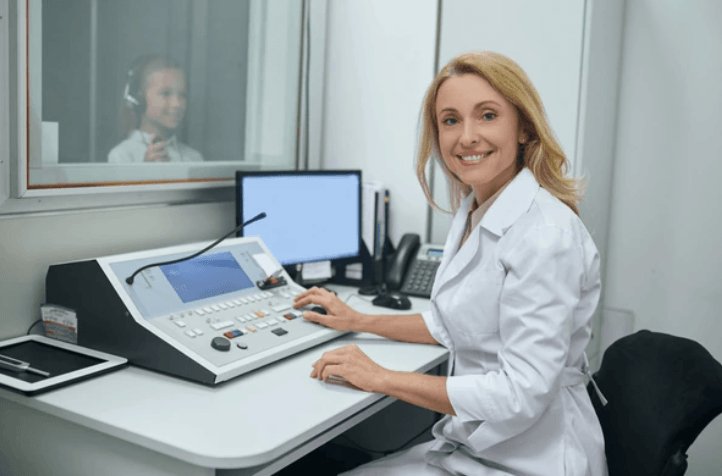
Every child with microtia has some degree of hearing loss on the affected side. The audiologist is the specialist who measures exactly how much, tracks it over time, and fits hearing devices when indicated. This is one of the most important relationships in your child’s early life — hearing is foundational to language development, and the audiologist is the expert who ensures your child’s access to sound is protected.
Most children with unilateral microtia have a completely normal inner ear on the affected side. The hearing loss is conductive — caused by the absence of an external ear canal — not sensorineural (nerve-related). This means the hearing nerve is intact and working. Audiologists use tests appropriate for each age: newborn hearing screenings, ABR (auditory brainstem response) testing for infants, and behavioral audiometry as children get older.
For children who can benefit from amplification, the audiologist fits softband BAHA (bone-anchored hearing aid) devices that transmit sound through the skull directly to the inner ear. For children with bilateral microtia and aural atresia, a bone-conduction hearing device on a softband should be fitted within the first two months after birth. For other children, the audiologist determines whether amplification is indicated and the appropriate timing.
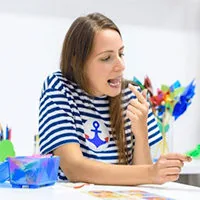
A speech-language pathologist monitors your child’s language development and intervenes early if delays appear. This specialist is especially important for children with bilateral microtia, where hearing loss affects both sides and the risk of language delay is higher. In unilateral cases, most children develop speech entirely normally — but monitoring remains a valuable safety net, particularly in the early years.
The hearing loss associated with microtia is a mechanical, conductive problem — not a cognitive one — but any degree of reduced sound input in the early years can subtly affect the speed of language acquisition. A speech pathologist identifies these patterns early, when intervention is most effective.
If your child is meeting all language and speech milestones, visits may be brief and infrequent — more checkpoints than ongoing therapy. If delays are detected, structured language therapy can make a substantial difference. The audiologist and speech pathologist work closely together, sharing the picture of your child’s auditory and language development.

Most cases of microtia are isolated and not inherited. But for families who want to understand whether there is a genetic component to their child’s condition — or who are planning future pregnancies and want to understand the risk of recurrence — a medical geneticist provides the most complete and current picture.
A geneticist will review your family history, examine your child for any additional features that might suggest a broader syndrome, and may order genetic testing. In isolated, nonsyndromic microtia, the chance of a future child being affected is generally low. A genetics consultation can provide a more individualized assessment, because risk varies depending on family history and whether a specific genetic variant can be identified.
For families in which microtia is associated with a known syndrome — such as Treacher Collins, Goldenhar (hemifacial microsomia), or CHARGE syndrome — the geneticist becomes a more central figure, helping to interpret findings and coordinate with other specialists involved in those conditions.
A neurotologist is an otolaryngologist with additional fellowship training in diseases of the inner ear, temporal bone, and skull base. The neurotologist most relevant to microtia families is the ear canal surgeon — the specialist who performs atresiaplasty, the surgical procedure to create or open an ear canal that is absent because of atresia or severely narrowed because of stenosis.
Atresiaplasty is not appropriate for every child with microtia. Whether to pursue it depends on the CT scan anatomy of the middle ear, the quality of the hearing structures, and careful weighing of risks and potential benefits. The ear canal surgeon works in close coordination with the microtia surgeon to ensure that if atresiaplasty is pursued, its timing does not conflict with or compromise the ear reconstruction.
Sequencing matters significantly. In most cases, ear reconstruction surgery is completed — or at least the critical early stages are done — before atresiaplasty is considered. Opening the ear canal in an area where the microtia surgeon needs healthy, undisturbed tissue can create complications for reconstruction. Your microtia surgeon will guide this conversation and timing.
Meet the surgeon who will coordinate your child’s team
Dr. Bonilla has worked with hundreds of families through every stage of the care process — from first diagnosis to the final surgical stage.